What is Distributed Coordination?
Distributed Coordination refers to the process and techniques used to manage the interactions and dependencies between multiple independent computing units (like servers, processes, or nodes) that are part of a distributed system.
The main objective of typical problems it solves.
- Leader Election
- Service Discovery
- Configuration Management
- Locking & Synchronisation
- State Management
Leader Election:
leader election is the process of designating a single process as the organizer of some task distributed among several computers (nodes). Before the task has begun, all network nodes are either unaware which node will serve as the “leader” (or coordinator) of the task, or unable to communicate with the current coordinator. After a leader election algorithm has been run, however, each node throughout the network recognises a particular, unique node as the task leader.
Service Discovery:
Service discovery is the process of finding and locating other nodes or services in a dynamic and heterogeneous environment. Service discovery can enable nodes automatically detecting discover, track, and monitor the health of services on a computer network. It aims to reduce the manual configuration effort required from users and administrators. A service discovery protocol (SDP) is a network protocol that helps accomplish service discovery.
Configuration Management:
Configuration Management in distributed systems refers to the process of centrally managing and distributing configuration data (settings, parameters, flags, secrets, etc.) across multiple services or nodes in a consistent, secure, and dynamic way.
Locking & Synchronisation:
Distributed lock is a basic for synchronisation that enables concurrent processes or nodes to coordinate access to a shared resource or crucial area in a distributed system. Distributed locks assist in avoiding conflicts and preserving consistency by prohibiting several processes from accessing a resource concurrently, much like traditional locks in single-threaded or multi-threaded contexts.
State Management:
State in a distributed system refers to the complete and unified view of all the individual states of the various components, nodes, or processes that make up the system at a specific point in time. It encompasses the status of every node, the data stored, ongoing transactions, resource allocations, and the interconnections between different parts of the system. Understanding and managing the global state is crucial for ensuring consistency, coordination, and reliability across the distributed environment.
Distributed Coordination Tools
1. Netflix Eureka:
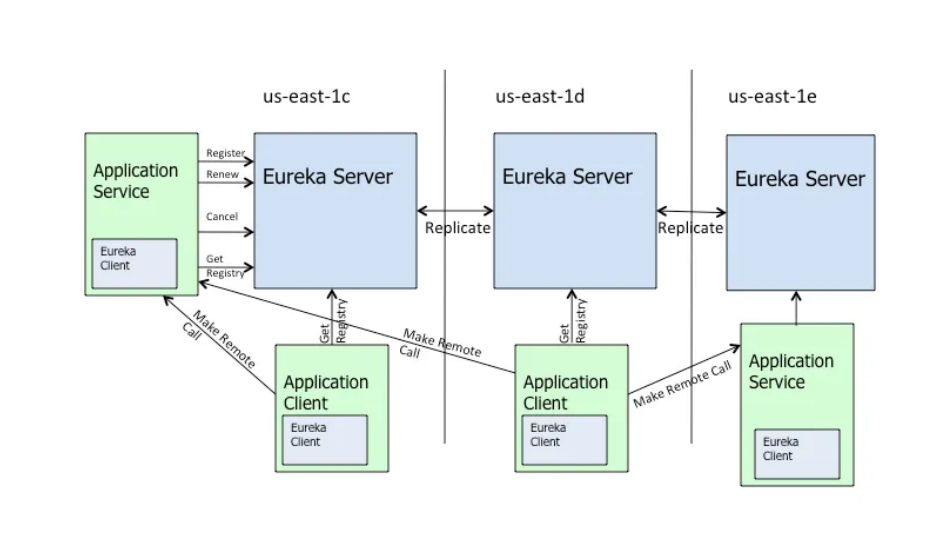
Netflix Eureka is a REST-based service registry and discovery tool, primarily used in microservices architectures to enable dynamic service registration and discovery, facilitating load balancing and fault tolerance.
High Level Architecture:
Best Features:
| Feature | One-Line Detail |
|---|---|
| Service Discovery | Automatically registers and locates services in a dynamic microservices environment. |
| Self-Preservation Mode | Prevents mass deregistration during network partitions to maintain service availability. |
| Client-Side Load Balancing | Works seamlessly with Netflix Ribbon to balance load between service instances. |
| Heartbeat Mechanism | Uses periodic heartbeats to ensure instances are alive and healthy. |
| Zone-Aware Routing | Routes traffic within the same zone/region to reduce latency and failure. |
| Heartbeat Mechanism | Uses periodic heartbeats to ensure instances are alive and healthy. |
| Zone-Aware Routing | Routes traffic within the same zone/region to reduce latency and failure. |
| Instance Metadata Support | Allows adding custom metadata to registered services (e.g., version, region). |
| RESTful API | Provides HTTP-based APIs for service registration, deregistration, and discovery. |
| Integration with Spring Cloud | Easily integrates with Spring Boot/Spring Cloud apps for zero-config discovery. |
| Peer-to-Peer Replication | Eureka servers replicate registry information across peers for high availability. |
| Lightweight and Easy to Set Up | Simple to deploy and integrate in Java ecosystems, especially with Spring. |
2. Apache Zookeeper:
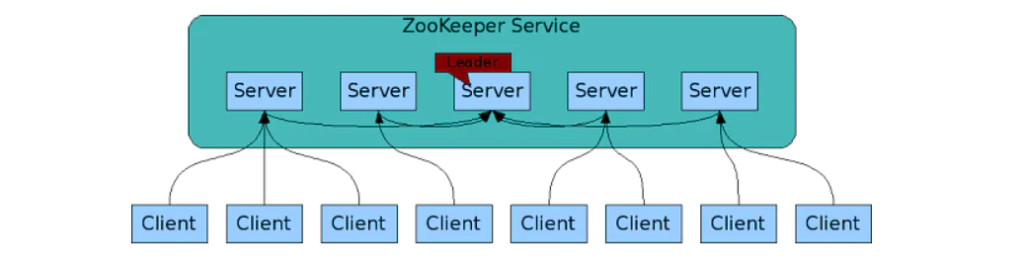
ZooKeeper is a centralized service for maintaining configuration information, naming, providing distributed synchronization, and providing group services. All of these kinds of services are used in some form or another by distributed applications. Each time they are implemented there is a lot of work that goes into fixing the bugs and race conditions that are inevitable. Because of the difficulty of implementing these kinds of services, applications initially usually skimp on them, which make them brittle in the presence of change and difficult to manage. Even when done correctly, different implementations of these services lead to management complexity when the applications are deployed.
High Level Architecture:
Best Features:
| Feature | One-Line Detail |
|---|---|
| Hierarchical Namespace | Stores data in a tree-like structure of znodes, similar to a file system. |
| Strong Consistency (CP) | Guarantees a consistent view of data across all nodes using the ZAB protocol. |
| Watches/Notifications | Clients can watch znodes and get notified on data changes instantly. |
| Ephemeral Nodes | Automatically deletes a node when the session that created it ends (used for locks, heartbeats). |
| Sequential Nodes | Supports auto-incremented nodes, useful for leader election and queues. |
| Distributed Locks | Enables coordination and mutual exclusion through ephemeral + sequential znodes. |
| Leader Election | Helps services elect a single leader among distributed nodes in a reliable way. |
| Lightweight Coordination | Minimal resource usage, suitable for coordinating distributed processes. |
| Quorum-Based Replication | Ensures high availability and fault tolerance using majority consensus. |
| Battle-Tested Ecosystem | Widely used in large-scale systems like Kafka, Hadoop, and HBase for reliable coordination. |
3. Alibaba Nacos:
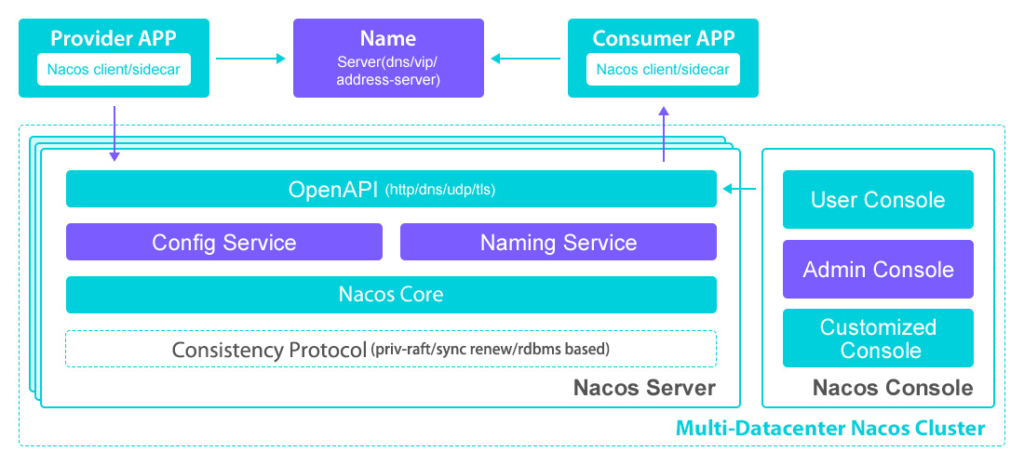
Nacos /nɑ:kəʊs/ is the acronym for ‘Dynamic Naming and Configuration Service’,an easy-to-use dynamic service discovery, configuration and service management platform for building cloud native applications.
Nacos is committed to help you discover, configure, and manage your microservices. It provides a set of simple and useful features enabling you to realize dynamic service discovery, service configuration, service metadata and traffic management.
Nacos makes it easier and faster to construct, deliver and manage your microservices platform. It is the infrastructure that supports a service-centered modern application architecture with a microservices or cloud-native approach.
High Level Architecture:
Best Features:
| Feature | One-Line Detail |
|---|---|
| Service Discovery | Automatically registers and discovers services with support for DNS and HTTP-based discovery. |
| Dynamic Configuration Management | Manages configuration in real time with support for hot updates and rollback. |
| Support for Multiple Data Formats | Handles properties, YAML, JSON, XML, and plain text configurations. |
| Real-Time Change Notifications | Notifies services immediately when configuration changes, enabling dynamic refresh. |
| Namespace and Grouping Support | Organizes configurations by environments, services, and tenants for better isolation. |
| Health Checking and Service Weighting | Supports service health checks and instance weights for intelligent traffic distribution. |
| Multi-Protocol Support | Works with gRPC, REST, Spring Cloud, Dubbo, and other protocols. |
| Access Control with RBAC | Provides role-based access control for secure configuration and service management. |
| Cluster Management UI | Offers a rich web-based UI for managing services and configuration visually. |
| Integration with Spring Cloud Alibaba | Seamlessly integrates with Spring ecosystem for cloud-native app development. |
4. Hashicorp Consul:
HashiCorp Consul is a service networking solution that enables teams to manage secure network connectivity between services and across on-prem and multi-cloud environments and runtimes. Consul offers service discovery, service mesh, traffic management, and automated updates to network infrastructure devices. You can use these features individually or together in a single Consul deployment.
High Level Architecture:

Best Features:
| Feature | One-Line Detail |
|---|---|
| Service Discovery | Automatically registers and discovers services via DNS or HTTP API. |
| Health Checking | Monitors service and node health with active checks and integrates status into discovery. |
| Key-Value Store | Offers a simple, consistent KV store for storing dynamic config or metadata. |
| Multi-Datacenter Support | Natively supports communication and replication across multiple data centers. |
| ACLs and RBAC | Secures access with fine-grained ACL policies and role-based controls. |
| Service Mesh with Envoy | Adds secure service-to-service communication, traffic shifting, and observability. |
| Dynamic Configuration | Supports live updates and watches on KV changes, enabling real-time config updates. |
| DNS and HTTP APIs | Flexible integration options with DNS interface and RESTful HTTP API. |
| Leader Election | Uses distributed consensus to manage a reliable leader for cluster coordination. |
| Consul Template | Dynamically renders config files or reloads apps based on KV/store changes. |
5. RedHat Etcd:
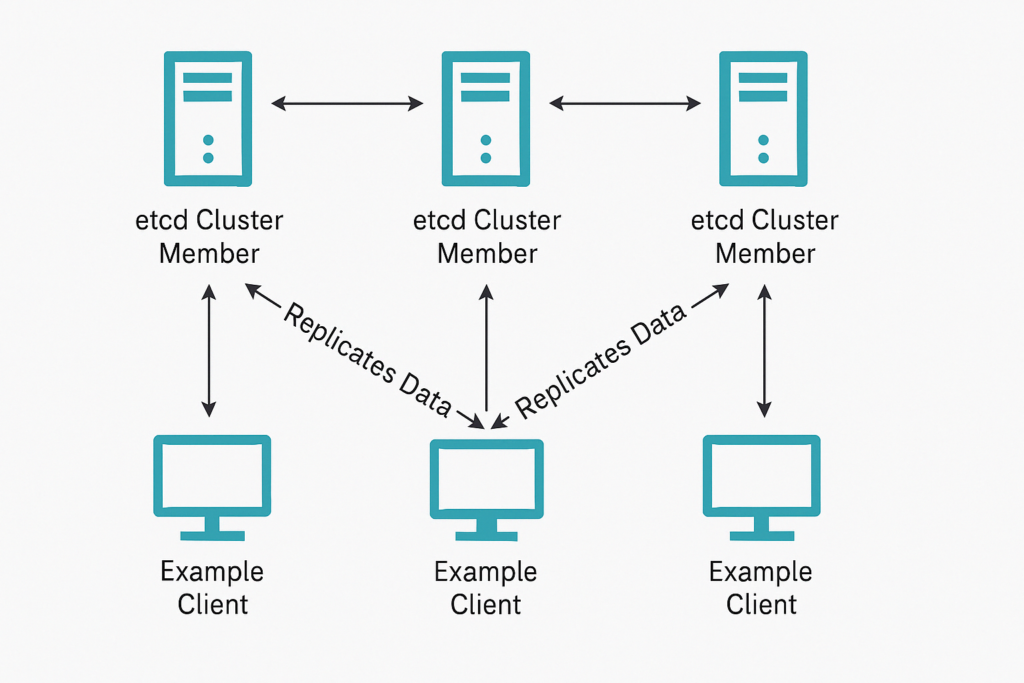
etcd (pronounced et-see-dee) is an open source, distributed, consistent key-value store for shared configuration, service discovery, and scheduler coordination of distributed systems or clusters of machines. etcd helps to facilitate safer automatic updates, coordinates work being scheduled to hosts, and assists in the set up of overlay networking for containers.
etcd is a core component of many other projects. Most notably it is the primary datastore of Kubernetes, the de facto standard system for container orchestration. By using etcd, cloud-native applications can maintain more consistent uptime and remain working, even in the face of individual servers failing. Applications read data from and write data to etcd; it distributes configuration data providing redundancy and resiliency for the configuration of nodes.
High Level Architecture:
Best Features:
| Feature | One-Line Detail |
|---|---|
| Strong Consistency (CP) | Ensures linearizable reads and writes across distributed nodes using the Raft protocol. |
| High Availability | Operates as a fault-tolerant cluster that survives node failures with consensus quorum. |
| Key-Value Store | Stores configuration, metadata, and coordination data in a simple and fast key-value format. |
| Watch Mechanism | Clients can subscribe to real-time changes on keys or directories for event-driven systems. |
| Lease and TTL Support | Supports time-bound key lifespans for dynamic registration, heartbeats, and distributed locks. |
| Distributed Locking | Enables coordination and mutual exclusion using leases and atomic operations. |
| Snapshot and Backup | Built-in support for consistent snapshots and restore for disaster recovery. |
| Authentication & Authorization | Provides fine-grained access control using users, roles, and permissions. |
| Multi-Version Concurrency Control (MVCC) | Supports versioned keys for safe concurrent access and history queries. |
| Well-Suited for Kubernetes | Serves as the core backing store for Kubernetes cluster state and coordination. |
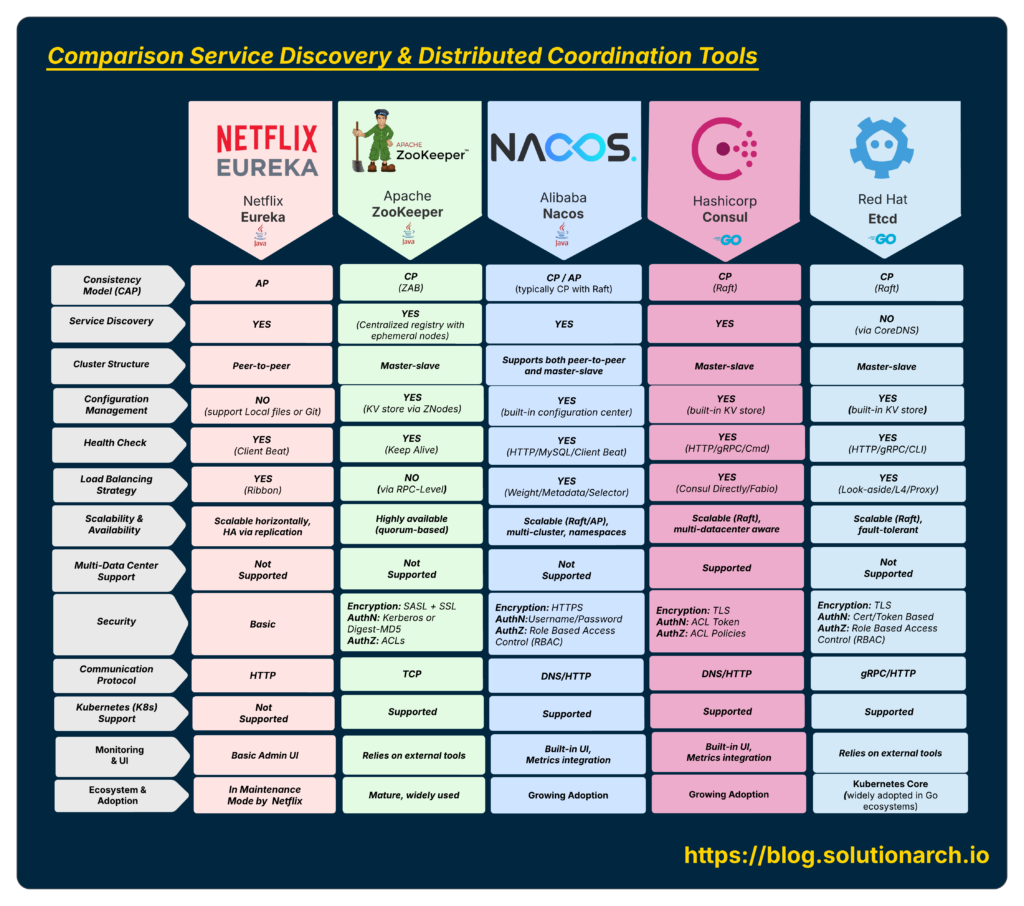
Comparison of Key Features:
Here’s a comparison of key features across major distributed coordination and configuration tools.
Integrations & Use Cases:
| Tool Name | Key Integrations | Typical Use Cases |
|---|---|---|
| Netflix Eureka | – Spring Cloud – Ribbon – Hystrix – Zuul | ✅ Service Discovery in Spring Cloud Microservices ✅ Client-Side Load Balancing ✅ Dynamic Instance Management |
| Apache ZooKeeper | – Apache Hadoop – Apache Kafka – Apache HBase – Apache Solr – Presto | ✅ Configuration Management ✅ Leader Election ✅ Distributed Locks and Barriers ✅ Naming Registry ✅ Metadata Management |
| Alibaba Nacos | – Alibaba Cloud – Dubbo – Kubernetes – Load Balancers – Various Application Frameworks | ✅ Service Discovery and Health Checking in Microservices ✅ Dynamic Configuration Management ✅ Dynamic DNS for Service Resolution ✅ Hybrid Cloud Service Discovery |
| HashiCorp Consul | – HashiCorp Ecosystem (Terraform, Nomad, Vault) – Istio (via Consul Connect) – Service Mesh Implementations – Load Balancers – Monitoring Systems – Various Application Frameworks | ✅ Comprehensive Service Discovery and Health Checking ✅ Distributed Configuration Management with KV Store ✅ Service Mesh Enablement (with Consul Connect) ✅ Multi-Datacenter Service Discovery ✅ Network Automation |
| Redhat Etcd | – Kubernetes – OpenShift – CoreDNS – Cloud Foundry – Distributed Databases – Locking Libraries | ✅ Kubernetes Control Plane ✅ Distributed Configuration Management ✅ Leader Election ✅ Distributed Locks and Synchronization ✅ Metadata Storage for Distributed Systems ✅ Storing dynamic config with TTL/watch |
Consideration Conclusion:
The choice of a distributed coordination tool depends on your specific requirements.
- Use ZooKeeper when you need strong coordination in distributed systems like leader election, synchronization, or metadata management, especially in big data stacks (Kafka, HBase, Hadoop) or systems that require high consistency and reliability.
- Use Nacos if you’re building Java-based microservices, want dynamic config + service discovery in one tool, and value ease of use + a UI dashboard.
- Use Consul when you need service discovery, health checks, and multi-datacenter support in cloud-native or hybrid environments, especially when working with HashiCorp tools or building a service mesh.
- Use Etcd when you need strong consistency, high availability, and lightweight coordination for distributed systems, especially in Kubernetes or infrastructure setups requiring reliable key-value storage and leader election.